Showing posts with label La Guerra Gaucha. Show all posts

22 April 2009

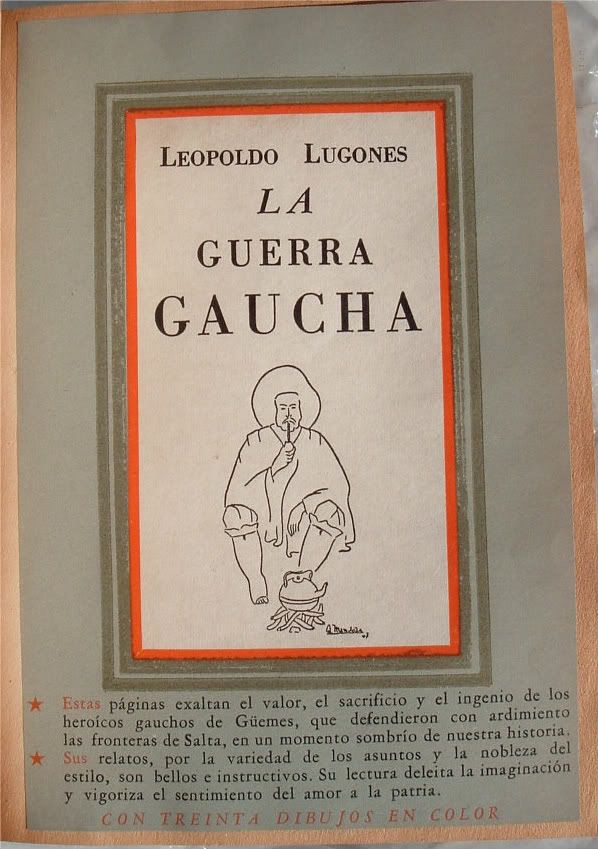
Review: La Guerra Gaucha


One dramatic footnote in the Argentine War of Independence took place in the northern provinces of Salta and Jujuy, where Spanish-led troops faced off with a guerrila force made up of local gauchos. Though not as strategically important as the campaigns of San Martín, Leopoldo Lugones found the confrontation between Spaniard and gaucho to be fertile ground for an exploration of courage, honor and patriotism. He travelled to the region to learn the oral traditions of the conflict and see the locations where the fighting had taken place.

Though he originally intended to write it as a novel, Lugones found that he could not work everything he wanted to say into one narrative, so La Guerra Gaucha became a collection of stories about the war. The short stories are to some extent disconnected: some feature skirmishes or battles while others feature the more day-to-day aspect of life during the war, and rarely does one get a sense of where each story fits into the larger strategic struggle.

The fighting, however, does serve as the binding force of the narrative. Even a simple local gathering can suddenly erupt into tense confrontation, and there are several stories in which the act of violence occurs suddenly, shockingly. The stories are also connected by several thematic elements, including the harshness of war, the desire for freedom, courage, sacrifice, fatalism.

The book does not want for fascinating characters--the friar who risks his life to signal the patriots, the gaucho who stages a suicide attack on a royalist fort, the young royalist lieutenant falling in love with a local widow--but Lugones' descriptive powers are effectively used to evocatively describe the land and its features. I never really considered Lugones a brilliant writer, as his other short story collections (Strange Forces, Fatal Stories) were longer on concept than linguistic fireworks. La Guerra Gaucha, on the other hand, reflects a sophisticated and striking command of language and imagery in service of the story he tells. Here he crafts a real sense of place to serve as powerful backdrop for the war being waged.

I will admit there were off moments, where Lugones shades off into a simplistic nationalism. Perhaps these struck me as terrible in part because I was aware of his later embrace of fascism, but luckily there were very few of those moments. Overall, I'd have to call it the strongest of Lugones' short story collections.

(Sadly, this book does not appear to have ever been translated.)

01 April 2009

LGG: "Tailon"/"Güemes"


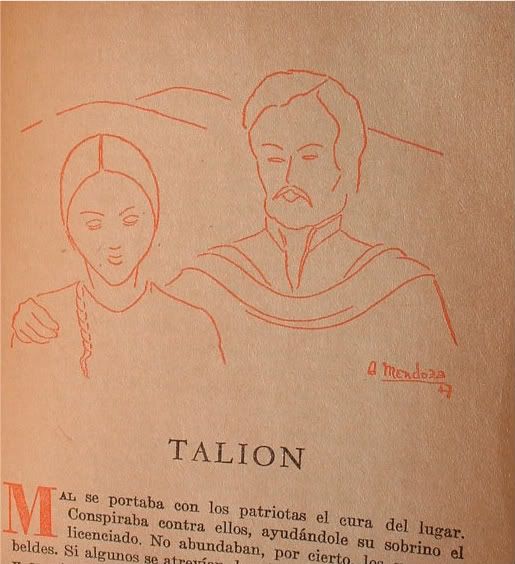
My copy of La Guerra Gaucha goes out not with a bang nor a whimper, but a D'oh! Just as "Tailon" reached its dramatic climax, it seemed to suddenly break off into a completely unrelated story. Lugones engaging in some sort of pre-post-modern wackiness? No, pages 273 - 288 just happened to be missing, apparently a major screw up in the whole printing/binding process.

Which frankly was a bit of a shame, because Tailon seemed a pretty solid story which cut off just as the big bad gaucho came back to put a hurtin' on the people he believed responsible for the death of his beloved. (I may have misread it, but I think the death was drawn somewhat ambiguously.) Prime among his targets seems to be a local functionary who is a royalist sympathizer. But the story cuts off, and I was left with the last couple pages of "Güemes" about the important montonero caudillo. Those last two pages seem to be a somewhat hagiographic portrayal of his death, though too much was cut out for me to get a good sense of it.

So, I'm finally done blogging the stories in La Guerra Gaucha, and only two weeks late. I'm going to hold off on the next collection (Silvina Ocampo's La continuación y otras páginas) until I've managed to write some reviews, on which I've managed to fall too far behind.

31 March 2009

LGG: "Un lazo"


This story feels as if it completes a cycle of sorts with the first story as we once again see the Dragones Infernales, a seasoned, elite group of montoneros. Among them is a gaucho who is something of a horse whisperer and a wiz with the lasso. Meanwhile, the royalist forces appear to be on the defensive, risking their lives to guard some pasture land to keep their animals alive.

The gaucho's lasso skill comes in handy when the montonera finally attacks the royalists and their grazing animals. The battle, violent in itself, has a pretty gruesome end. Like "Despedida," the combination of sudden, gory violence amidst Lugones' somewhat verbose style can make for a shock. I'd be willing to call it a dramatic cheat or a celebration of nationalist violence, except that it really does fit in with the sort of hardscrabble existence painted in even those stories that lack much in the way of violence.

30 March 2009

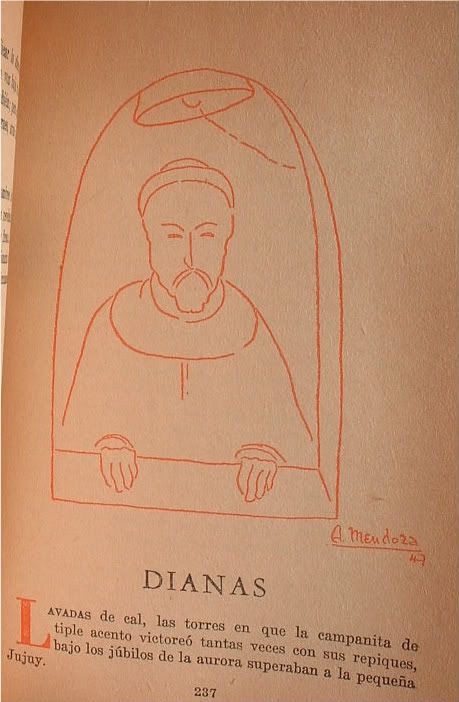
LGG: "Dianas"


As I wrote in my last post, most of the stories seem to have the same elements repeated over and over. The patriot here is an old monk. The land isn't so much inhospitable, though it does play a role. And there's the encounter with the royalists, who have taken over the town where the monk resides. The monk decides that he can't abide the royalists, and so when the Spanish forces ride off to ambush a force of montoneros, the monk rings the church bell so as to warn the gauchos. The royalists ride back and grab the monk, beating him severely. However, his action leads to the royalists' defeat, and he manages to escape as they retreat.

Embedded in the story is the monk's own background, as a gaucho who decided to become a man of the cloth, although he maintains a certain uncouth individualism. Again there is the patriotism which leaves me a little flat, though I thought this story at least grounds it in an interesting character.

29 March 2009

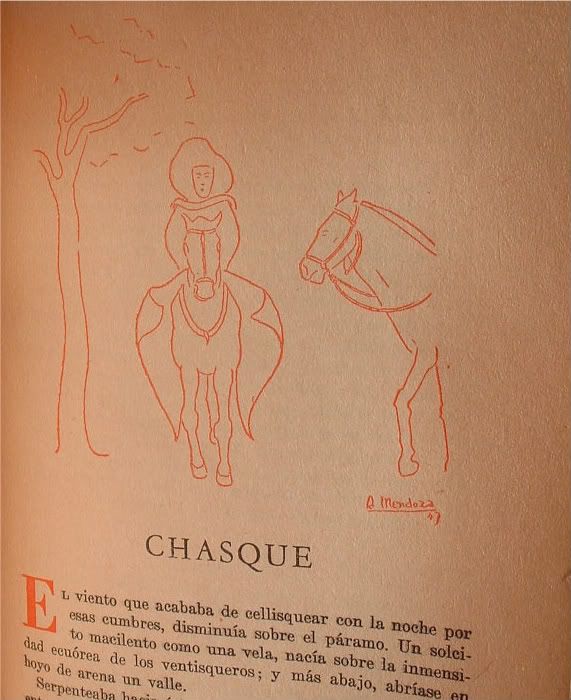
LGG: "Chasque"


A royalist force guards a mountain pass during some harsh winter weather. A rider comes up, but there is something sort of suspicious about him. A tell-tale sign allows the guards to realize that the rider is a woman whose lover has been fighting for independence and who has been carrying messages across the lines. That's roughly the whole story, and I'm starting to think many of the stories can be broken down into a few elements. The patriot and their motivation for fighting the Spanish. The inhospitable terrain. The encounter with the Spanish.

It's not a formula per se, and I think Lugones does more within those bounds than he did, say, with Strange Forces. Lugones, of course, was principally a poet, and I can't help but see some connection to Borges here. Borges was also first a poet, and most (if not all) of his stories can be thought of as pretty simple, but manage to achieve a certain abstract transcendence with very few elements. Lugones doesn't really come close to Borges in that respect, but there's a certain power to his repeated use of the same themes.

28 March 2009

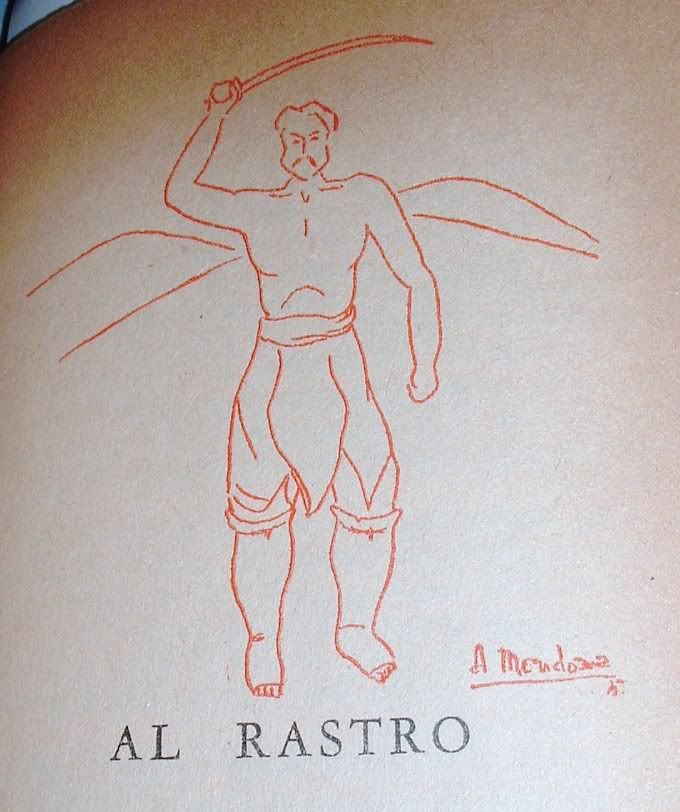
LGG: "Al Rastro"


"Al Rastro" seems like a good companion to "Tactica," as both of them concentrate pretty clearly on the battle aspect, showing how the montoneros would have waged this sort of war. Lugones apparently drew from an existing oral tradition when writing the stories, but this one sounds almost too good to be true.

In the story, a gaucho decides that he has had enough of the Spanish troops in his country and stages a one-man attack on a fort. First, he detonates a gunpowder-filled cart in front of the local fort, and then he attacks the survivors, until he himself is mortally wounded. It's a fun little bit of badassery, which is why I find myself feeling somewhat skeptical about its basis in truth.

27 March 2009

LGG: "Tactica"


After a story which pretty much relegates the war to the background, "Tactica" takes us back to the hear of the war. The story regards a battle between a large contingent of royalist forces and an even larger force of montoneros. But first, Lugones spends some time on the toll that the long campaign has taken on both sides. Although this is a theme that he's brought up before, it added to the realism of the account.

One thing I realized is that Lugones' descriptive powers are interesting but thhere's something about the language I find challenging. One description of a fire seemed hard to follow, until I looked up a couple of works and realized that he was comparing it to the mane of a red horse. Considering the importance of the horse in gaucho culture, it seemed like a pretty apt metaphor.

26 March 2009

LGG: "Jarana"


Whenever the royalist forces would retreat from the field of battle, the montonera would get together, in part to celebrate and in part to take advantage of the opportunity to get a lot of people together for a celebration. The story takes place during one of these get-togethers, which includes two weddings. The celebration includes a cock fight and the slaughtering of a steer for the feast. The choice cuts of meat are to be grilled up, as is the standard for Argentine outdoor events.

So, there's not really much of a war and not that much of a plot, but it is an interesting portrayal of life and celebrations in the Salta of the early 19th century. Included is a ritual where some of the steer's blood is used to draw a cross on the door of the house outside of which the celebration is held, as well as the burying of small pieces of meat at all the four corners of the house.

25 March 2009

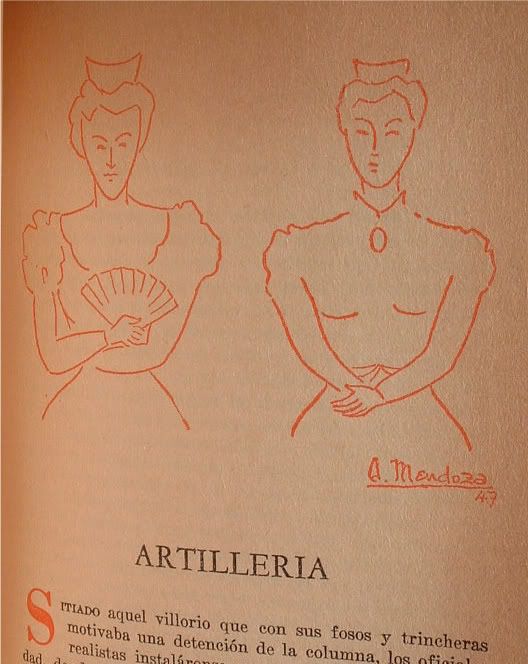
LGG: "Artilleria"

Sometimes I think Lugones is being a bit funny with the names. For example, this story does have an artillery piece, but the story seems to revolve more around one character: a wealthy and beautiful spinster. The woman in question has remained a spinster because she is a mulatto and therefore socially marginal. She does take up the patriot cause and even sends her slaves to fight alongside the montoneros.

Another way in which she serves the cause of independence is by throwing parties at her estate for the Spanish forces, thereby getting them all worn out and hungover before they have to fight the montoneros. This does raise some doubt on the part of the gauchos as to where her loyalties lie, but she comes through for them by providing metal to forge cannonballs for their artillery piece.

There's a curious sort of parallel at work in the story. The story introduces two spinster sisters but then goes on only to involve one of them. Similarly, the story introduces two artillery pieces, but one is quickly destroyed, leaving only one in the story. I'm not entirely sure what to make of it.

Perhaps the most curious element in the story (at least to me) is that of race. Lugones really plays up the sort of seductive otherness of the woman when discussing her parties meant to distract the royalists in a way that now would seem dated. And yet, she does come off as a heroic figure. Overall, a little hard to gague whether its racial politics are painfully dated or intriguingly ambiguous. It does make me more curious as to the history of people of African ancestry in Argentina.

24 March 2009

LGG: "Vivac"

This is kind of an interesting change of pace, in that the story is really just about a bunch of gauchos sitting around passing the mate around and chewing the fat. One of the gauchos happens to be a great storyteller, so the other gauchos convince him to tell them some stories. (The gaucho as storyteller element comes up in Don Segundo Sombra, too.)

There's an interesting progression to the three stories he tells. The first is a pretty typical folktale about the fox and the jaguar, with the fox and the jaguar being relatives and friends until the fox cheats the jaguar. The second story is something of a ghost story, introducing a human element and some local color. The final story completes the process by being a pretty horrific story of a gaucho and his dog.

There's always something a little artificial about stories within stories, but I tend to find them quite a thrill when they're done well. I wouldn't place this at the top of the scale, but I thought it was quite well done.

23 March 2009

LGG: "Vado"

The story begins with the ambush of royalist forces by montoneros. The montoneros later meet up with a person who would probably be described (in PC terms) as mentally challenged. He ends up becoming sort of adopted by the group as "El Tontito de la Patria." But he turns out not to be as harmless as they originally assumed.

I've had a little less to say over the last few stories, in part because there hasn't seemed to be as much to point out. None of the stories have really bugged me, as did some of the first ones that leaned a little heavily on shout-outs to the homeland. Also, my expectations have fallen more in line with the stories, so I'm no longer feeling disappointed that they don't seem to tell that much about the Gaucho War as a war.

There's an interesting sense of the place and of the sort of desperate situations that men could find themselves in when in such a terrain. (In that way, they´re somewhat reminiscent of Horacio Quiroga's stories of life in the jungle.) There´s occasionally an interesting character or a surprising plot development, sometimes with a hint (or more) of the supernatural. Overall, it's a fairly coherent and enjoyable, if not transformative, collection of short stories.

22 March 2009

LGG: "Milagro"

As the royalist forces retreat following a defeat, a group of them remain behind to convalesce at the estate of a local widow. The soldiers have become aflicted with yellow fever I believe, and as the rain continues to pour outside, day after day, they are slowly dying. The widow whose estate they stay at knows enough about medicine to take charge of the care of the soldiers, although there is not much she can do to halt the effect of the fever.

It turns out that her loyalties lie elsewhere, and though she doesn't neglect the soldiers, she lets her views be known. The sergeant, in charge of the remaining eleven soldiers, sees no recourse but to punish her. This sets up the miracle from which the story gets its name.

Sort of with the last one, the strongest element struck me as the grim atmosphere. The conflict would be more dramatic if Lugones had better skill at characterization.

21 March 2009

LGG: "A Muerte"

A young montonero is mortally wounded in combat with royalist forces. As he flees from the battlefield, he is found by his lover, a young woman of native ancestry. She carries him to safety, although the effort causes her to have to stop multiple times. Finally, she brings him to a cavern, one into whose walls appear to have been carved iconography of the people who lived on the land before the arrival of the Spanish.

It's harrowing, dying-in-the-jungle element reminds me a bit of Quiroga's "A la deriva," though that is a story of a man dying alone. There's also some degree of the same ambiguous supernaturalism that shows up in "Castigo." Though not a horror story, it's certainly horrific, especially right at the end.

20 March 2009

LGG: "Carga"

The story involves a montonera that, lacking arms and men, decides to use a novel strategy for taking down a royalist fort. There's a pretty strong description of the desperate situation they are in at the beginning of the story. They manage to eke out an existence, relying on some of the local flora and fauna for nourishment, but it is not a particularly hospitable environment. This is an instance where Lugones' fondness for description is quite effective, both giving a nice sense of place to Salta and adding to the impression of hardship.

There's also and interesting section in the middle which gets into the gaucho attitude to the horse, which is an integral part of the culture. While reading Don Segundo Sombra, I was struck with how the gauchos seemed to have a word for every different kind of horse, even down to the different types of coloring.

The men finally decide to use the stampede the horses at the fort (shades of "The Horses of Abdera"), causing destruction, a decision they are not entirely please with. The description of the stampede, staged as it is at night, is quite striking.

19 March 2009

LGG: "Castigo"

Maybe it's just me but the stories are getting more complex, which makes for a better reading experience though one that sometimes leaves me feeling like I may have missed something. This one involves a flashback to an expedition that was intending to raid a ranch belonging to a patriot. The royalist forces attempt to get to the ranch via the rivers, but are tricked by their Native American guides and then slaughtered in an ambush by the tribe.

However, the title (which means "punishment") refers to a seemingly supernatural act of revenge that takes place outside the flashback. Dramatic finish, though I would probably benefit from rereading it.

18 March 2009

LGG: "Despedida"

It's a rather brutal tale of revenge, though the revenge comes pretty quickly at the end. Otherwise, there's some interesting characterization of two characters and some interesting local color, including a game of taba. (A game that involved throwing the knucklebone of a cow and betting on which side would land up. Also featured in Martin Fierro.) Overall, a pretty good story.

17 March 2009

LGG: "Serenata"

The name of the story comes from the serenade that a payador/montonero sings for a landowner in order to convince him (the landowner) to give him and his buddies some aid in the war. The plot is that the payador shows up with two fellow montoneros at the hacienda of this patriotic landowner. The song gets performed, and the landholder gives the men fresh horses, provisions, and a firearm. This one appears to involve mostly subtle touches.

There's the usual atmospheric motif, which struck me as rather enchanting in this story. It didn't really add to the plot but Lugones' use of imagery and metaphor was striking.

There's also some interesting character sketching, both with the payador and the landholder. The landowner is fixated on the book Historia de Carlo Magno y los Doce Pares de Francia, which I believe translates into The History of Charlemagne and the Twelve Pairs of France. From the little we're told about the novel, it appears to be a rather sensational telling of the life of Charlemagne and includes feats of derring-do against creatures like giants. When someone tries to tell him the book is largely fiction, he gets angry and refuses to believe it.

When the payador shows up and asks him for aid, the landholder gets excited and starts talking about the characters in the book. The payador only understands that the landowner is talking about great men who are long dead and infers that the old man is talking about people he knew in his lifetime. So, there's some shades of Don Quixote there, though with Lugones' own variation on it.

(Due to sleep deprivation, I had to read this story twice and ran out of time to write it up. I'll be doing two today.)

16 March 2009

LGG: "Juramiento"

As a fiction writer, I wouldn't say Lugones is a brilliant writer, but there are some things I think he does well. One of them is write about fatalism and love, which seem often to be connected in his works. His Cuentos Fatales is intriguing in starting off like a sequel to Fuerzas Estrañas before transforming into an exploration of those entwined concepts. In a way, it's almost not surprising that Lugones killed himself in part over an unrequited infatuation.

"Juramiento" is the story of a royalist officer captured by a montonero raid on a fort. The montoneros want to execute him but feel he must first be allowed to heal from the injuries he received in the fighting. They take him to the home of a young widow who supports the patriotic (i.e. Independence) cause. While the officer heals, he and the widow, though sworn enemies, fall in love. For me, that part of the story, though cliché, worked pretty well, due for Lugones' talent at conjuring up romantic love as a kind of surrender to destiny.

However, the end of the story was awful or perhaps just dated. The officer decides to join the independence movement, mostly out of that same sense of destiny. He is accepted by the montonera, and he and the widow ride out and give short speeches about patriotism. The widow is decked out in blue and white, which happen to be the colors of the Argentine flag, so the patriotic symbolism hits incredible heights of obviousness.

It's possible I'd like this story more if I didn't know that Lugones would go on to become something of a fascist. It's easy to see in the combination of fatalism and patriotism as precursors to fascism. Or maybe it's that the patriotism in the book strikes me as a bit simplistic. My skeptical mind suspects that the gauchos of Salta might have been fighting for some less abstract than just the homeland, and that playing up their patriotism renders them dull saints to Argentine nationhood.

15 March 2009

LGG: "Baile"

The title seems like a bit of a macabre joke. As the story starts, there are people gathered together in a small building and some musicians readying their instruments, so it would appear that the story will feature some sort of festivities, including dancing. Instead it turns out that the people are there for the velorio (memorial) of a dead child. The royalist forces show up, so the men run and hide in the woods. The soldiers then rape the remaining women, until the men come back, attacking with knives. As the fight proceeds, the women pick up the weapons of the fallen men and join in the attack on the royalist forces.

Like "Alerta" this story involves rape and the death of a child, though it otherwise different. (I'm reminded of Lugones' use of the idea of converting sound into other forms of energy in two different stories in Strange Forces.) Again, maybe I'm just getting more into Lugones, but the stories seem to be getting somewhat better. I still feel that the stories lack much in the way of actual conflict, especially since this is the second story in a row where the guerilla fighters are placed on the defensive.

Strange Forces seemed to sacrifice dramatic impact for some rather heavy "tecnoparloteo" (a term I owe to Evelyn Leeper), but La Guerra Gaucha leaves me wishing Lugones got a little more into the technical, or at least practical, aspects of a force of gauchos waging guerilla warfare in the mountains of Salta province.

LGG: "Sorpresa"

This story is about a band of montoneros who are led by a captain who happens to be literate. The captain wishes he could get a hold of a bugle, because he feels the ability to sound off with a bugle would make give his men a fighting edge. One day, the meet up with an old blind guitarist who ends up joining their band. The guitarist composes a song for them, and the men of the group end up learning it. One night, while they are camped out, they are snuck up on and attacked by the royalist troops. At first, the men scatter, but then the blind guitarist begins to play the fighters' song. The men rally. And even though they are all killed, they fight bravely all the way until the end.

The stories may be growing on me, because I liked this one a little bit more than the previous stories. It does have something resembling an actual plot, although the idea of a bugle for what are essentially guerrilla forces struck me as a bit silly.